
When I was maybe fifteen, my always optimistic and encouraging mother gave me an envelope with a five-dollar bill and a note that said “To start a fund to feed the people of the world.” It must have been her response to one of the wide-ranging discussions we often had, about everything we’d read about or heard on the news. Five dollars was a significant amount of money back then, about what I’d earn from a week of mowing neighbor’s lawns, but not enough to feed that many people. But, of course, it was just a message, the start of the future fund. I kept it for many years, and found it again when sorting through my old bedroom in my parents’ house almost fifty years later, when my father was moving to a retirement community and my mom had been dead for a couple of decades.
I took that idea of wanting to somehow feed “the people of the world” with me to Stanford as a freshman. Paul Ehrlich, who died on March 13 at the age of 93, was a key founder of the brand-new Program in Human Biology there, and one of the main lecturers in the introductory core course of the interdisciplinary program. I immediately declared “HumBio,” as we called it, my major. For me, at least, the vision of the program was to educate students who wanted to figure out how to develop ecologically sustainable human societies on our finite planet—sort of an expansion and extension of my mom’s five-buck-feed-the-world challenge, I think now.
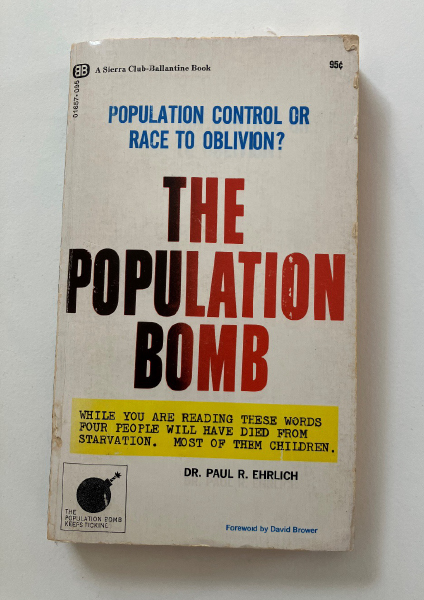
Ehrlich’s book, The Population Bomb, published in 1968 by the Sierra Club and Ballentine Books, had just exploded into a creative national controversy and debate. I read it during that first year in college, and still treasure my old, yellowed copy of the original version. Ehrlich’s first of more than twenty appearances on the Tonight Show with Johnny Carson was in January 1970, around the time I was listening to his lectures in Dinklespiel Auditorium. In my mind, he ranks with J. Robert Oppenheimer, Carl Sagan, and E.O. Wilson (and a few others) as a public scientist—the subset of scientists willing to push us and our political representatives to make science-based public policy.
Ehrlich wasn’t the first to raise the alarm about how humans were stressing the ecological limits of the planet. It was crystal clear to many people at that time that Thomas Robert Malthus had been right, more than a century and a half earlier, about the ability of human reproduction to overshoot the resources available to support the human population. Malthus (1766-1834) was an English political economist, demographer, and Anglican cleric. I love the title of the book, first published in 1798 and in a second edition in 1803, in which he explained his argument: An Essay on the Principle of Population; or, A View of Its Past and Present Effects on Human Happiness; with an Inquiry into Our Prospects Respecting the Future Removal or Mitigation of the Evils which It Occasions. Charles Darwin, one of the two scientists who first explained the mechanisms of biological evolution in the mid-1800s (the other was Alfred Russell Wallace), derived part of his thesis of natural selection from Malthus’s essay.
By the late 1960s, the baby boomers and their parents had forgotten that about twenty years earlier, just after World War II, ecologists had raised alarms about the state of the human-nature relationship. In Road to Survival, published in 1948, William Vogt concluded that “Unless, in short, man adjusts his way of living in the fullest sense, we may as well give up all hope of civilized life.” Our Plundered Planet, by Fairfield Osborn, was published the same year; the teaser on the cover of the first edition stated that “With disturbing clarity this book points out that we are more likely to destroy ourselves in our persistent and world-wide conflict with nature than in any war of weapons yet devised.” Oh, when will they ever learn, to quote Pete Seeger’s 1955 song “Where Have All the Flowers Gone?”
_______
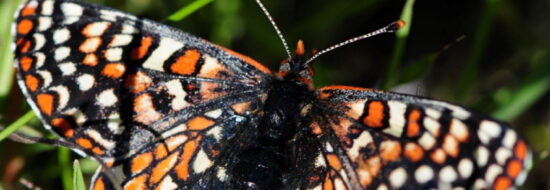
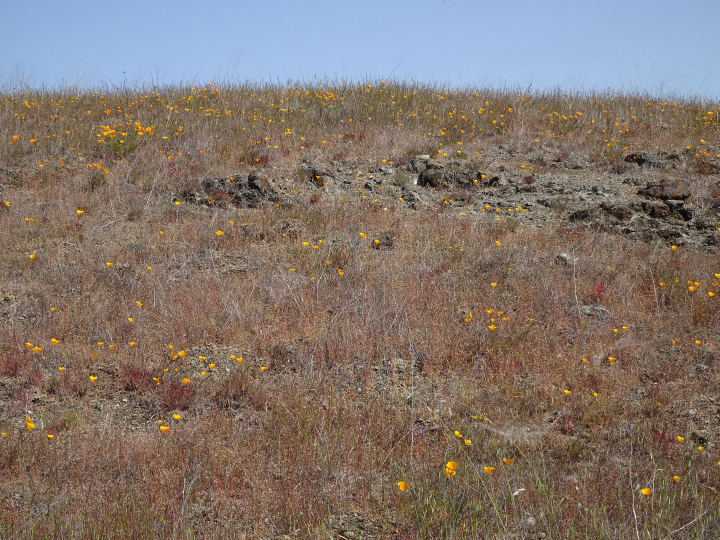
Paul Ehrlich was an evolutionary ecologist who joined the Stanford faculty in 1959. His research focused on a rare and endangered local butterfly, the Bay Checkerspot, Euphydryas editha bayensis, found only on the scattered areas of serpentine grassland on the San Francisco Peninsula and the South Bay that support its larval host plant. My notebook from the Human Biology core course, which I still have, is full of notes about his favorite butterfly and what it could teach us.
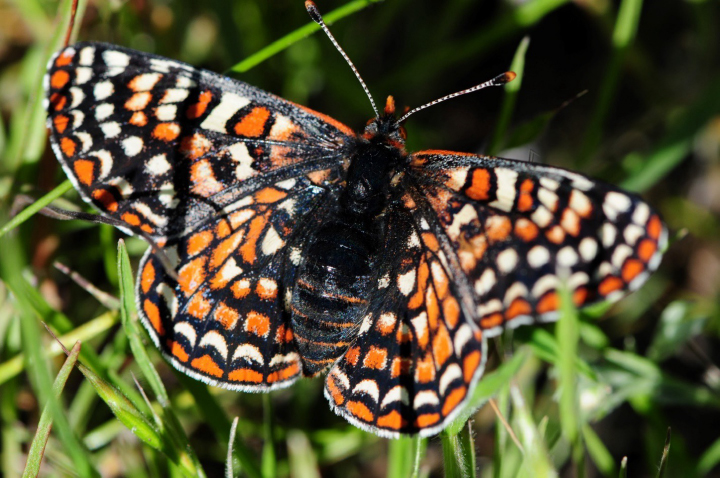
Ehrlich’s main study site was on Jasper Ridge, almost on the San Andreas Fault, and less than five miles from the Stanford campus. He and his students captured butterflies during their brief adult flight season in the spring (March-May) and marked them. If the marked individuals were recaptured, the frequency of previously marked butterflies to the total number captured later could provide an estimate the size of the total population, and also tell where and how far each individual had moved. Four years of initial observations (1960-1963) were summarized in a paper in the journal Evolution in 1965. Ehrlich had already published an influential paper (also in Evolution) in 1964 with plant ecologist Peter Raven, a fellow Stanford faculty member, in which they described reciprocal evolutionary interactions, or “coevolution,” between butterflies and plants.
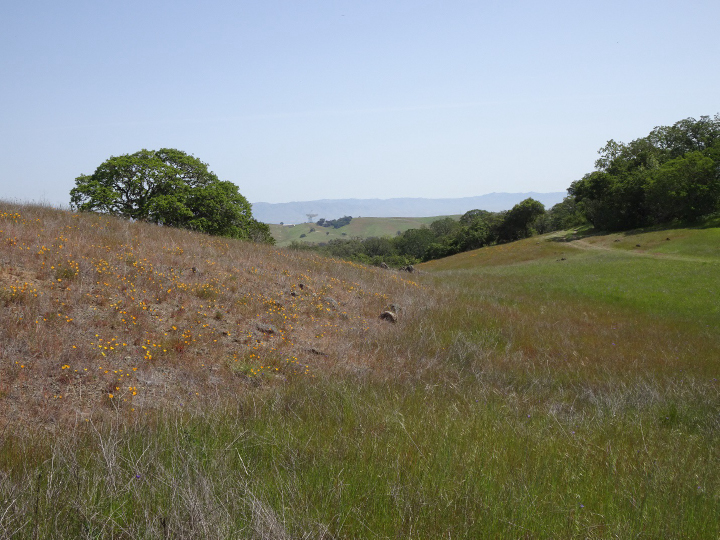
The Bay Checkerspot is found on scattered, isolated areas of serpentine, a unique type of rock and soil that is toxic for many plants, except those like this butterfly’s larval host plant that have evolved to tolerate it. The serpentine habitats favored by the Bay Checkerspot are equivalent to islands, making it a good subject for evolutionary studies, just as the finches on the Galapagos Islands were for Darwin. And these scattered serpentine grassland islands were shrinking because of human actions. They were threatened by the invasive annual grasses introduced from the Mediterranean region by the Spanish colonizers of California in the late 1700s, and more recently by the sprawl of freeways and cars whose nitrogen emissions fertilize those invasive grasses, overwhelming the delicately adapted serpentine species. So, the Bay Checkerspot was also a good case study for ecologists interested in species conservation, like Ehrlich.
As for many other insects, the size of butterfly populations can vary dramatically from year to year, depending on climatic factors. If a Bay Checkerspot population in one of its scattered habitats failed to survive and became locally extinct, the area potentially could be colonized again by butterflies dispersing from neighboring populations. But that’s a risky existence, given the island-like distribution of appropriate serpentine habitat and the threats to it caused by human activities. Euphydryas editha bayensis was listed as a “threatened” subspecies under the Endangered Species Act in 1987. As such, because of the habitat conservation and population recovery requirements of the ESA, it has been called an “umbrella” species, essentially sheltering and helping to protect serpentine habitat and all the other unique, endemic species found there. Jasper Ridge was designated as a biological preserve in 1973, thanks in large part to Ehrlich’s lobbying of the university administration. He and his students and colleagues continued to study the Bay Checkerspot at Jasper Ridge, watching its numbers go up and down, until, in 1998, they disappeared; it had become locally extinct. So far, no butterflies from other Bay Checkerspot populations have recolonized Jasper Ridge, and its deliberate reintroduction has not been seriously contemplated.
In his writing and lectures, Ehrlich often told a story he called “the airliner and its rivets.” It was a very powerful image for me and has stuck with me ever since:
“Imagine you have just boarded a plane for a flight, in a window seat where you can see the wing,” he said. “You see a guy with a crowbar out there, pulling rivets out of the wing, and, concerned of course, you push the call button for the flight attendant. ‘Excuse me, but there’s a guy out there pulling rivets out of the wing!’ you tell her excitedly. ‘Oh, don’t worry about that,’ she replies; ‘he’s been doing that for quite a while, and there haven’t been any problems yet.’” Okay, Ehrlich asked us: “What do you do? Ignore it and start reading the airline magazine? Or bolt for the door before it is closed, and refuse to fly on that plane?”
Then he explained his analogy. For centuries, even millennia, humans have been causing the extinction of other species through their actions, whether it was hunting the Pleistocene megafauna to extinction, or converting large tracts of natural ecosystems to our extremely simplified agricultural ecosystems. “Those species,” Ehrlich said, “are the rivets of Spaceship Earth. So… what are you going to do? Take another flight?” We all chuckled uncomfortably; there’s no other plane to fly on! For me, and for at least a dozen others in that class, I’m sure, our lives and careers took an instant turn, and we knew that what we really wanted to do was to figure out how to stop the guy who was pulling out the rivets. The challenge was, he was us, we were him.
For Ehrlich, the Bay Checkerspot was one of those rivets.
The airliner-and-its-rivets parable is related to the concept of the “butterfly effect,” in that both are about how seemingly small changes can multiply or magnify in sudden and unpredictable ways. If you google “butterfly effect,” you will find various explanations about how, in chaos theory, small and seemingly insignificant changes in initial conditions in complex nonlinear systems can have large effects downstream. The idea was proposed by Edward Lorenz, a meteorologist, who discovered that his computer weather models were very sensitive to tiny rounding protocols in the initial data, such that they hardly ever gave exactly the same result. In his 1963 paper The Predictability of Hydrodynamic Flow, Lorenz wrote: “One meteorologist remarked that if the theory were correct, one flap of a sea gull’s wings would be enough to alter the course of the weather forever. The controversy has not yet been settled, but the most recent evidence seems to favor the sea gulls.” In later talks and scientific presentations, Lorenz shifted the metaphor from seagulls to butterflies, perhaps thinking that butterflies were more charismatic or poetic than seagulls. The title of a talk he gave at the 1972 meeting of the American Association for the Advancement of Science was “Does the Flap of a Butterfly’s Wings in Brazil Set Off a Tornado in Texas?”
One flap of a butterfly’s wings, one more rivet gone: does it really matter? A corollary of the butterfly effect and the rivet story is the “precautionary principle.” This principle basically cautions against taking risks that may have negative consequences of unknown magnitude. It’s really nothing more than carrying forward into the realm of modern science and policy the old human experience and wisdom captured in sayings such as “better safe than sorry,” “look before you leap,” or “an ounce of prevention is worth a pound of cure.” In chaotic, complex systems, where predicting outcomes is iffy, the precautionary principle urges a high level of conservatism. If it ain’t broke… don’t mess with it. Well, the biosphere wasn’t broke… but we have been messing with it for millennia.
Just before the United Nations Conference on the Human Environment convened in Stockholm in 1972, the first “Earth Summit,” Ehrlich and John Holdren, a Berkeley physicist, published a paper in Science on the “Impact of Population Growth.” In it, they began to explore the factors that create the “impact” of every human on the global environment. “In an agricultural or technological society,” they wrote, “each human individual has a negative impact on his environment. He [sic] is responsible for some of the simplification (and resulting destabilization) of ecological systems which results from the practice of agriculture. He also participates in the utilization of renewable and nonrenewable resources.”
Their formulation soon evolved into what has become the standard equation for expressing the human ecological footprint and strategizing about how it might be reduced to foster a sustainable human future: I = P × A × T, where I is impact on Earth’s life-support systems; P is population size; A is “affluence,” the term they used for the per capita consumption of renewable and non-renewable resources (i.e., materials and energy); and T is the type of technology used to generate each unit of consumption. Their purpose was to counter the simplistic claims that some were making at the time that runaway population growth in poor countries was the main threat to the global environment. The I=PAT formula points out that one person in a rich country can have a much greater environmental impact than someone in a poor country. At that time, any person in the U.S. was consuming hundreds of times more resources than anyone in China, for example, so the total global impact of the U.S. population was vastly greater than China’s, even though our population was much smaller. They also pointed out that the type of technology used could make a big difference. Passive solar heating could heat homes with a much lower ecological impact than natural gas or electric space heating, for example.
_______
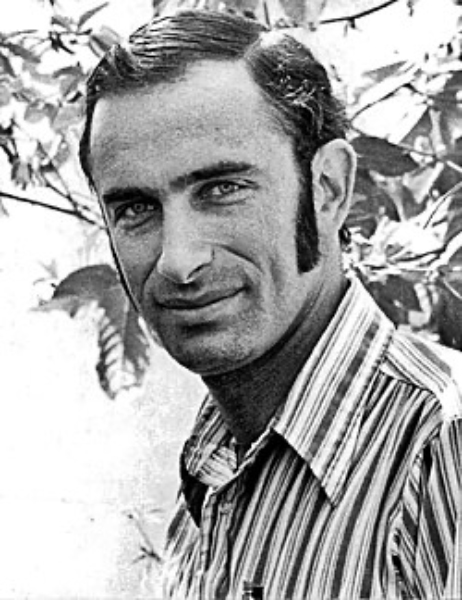
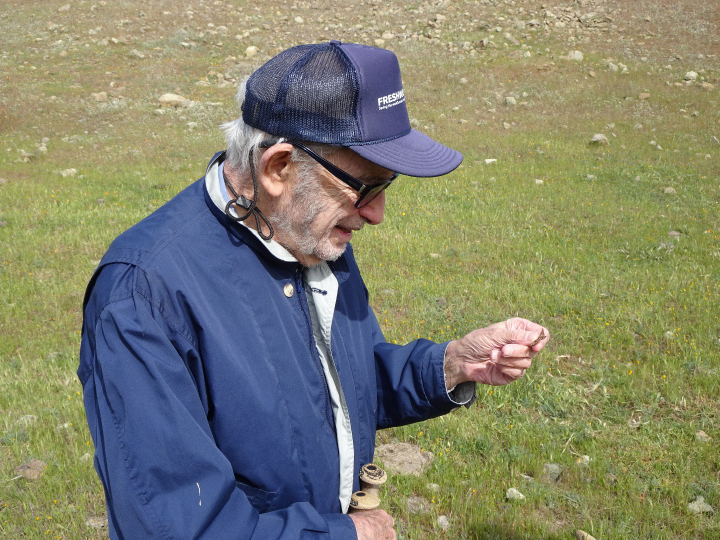
During a visit to the Bay Area in April, 2022, while doing research for my book Nature on the Edge, I had the had the opportunity to meet and talk with Paul Ehrlich again after 50 years. His long-time student, lab assistant, and research colleague, Dr. Stuart Weiss, had persuaded Paul to come butterfly-chasing with us at the Coyote Ridge Open Space Preserve, not far off of Highway 101 southeast of San Jose, the heart of Silicon Valley. Stu had scouted there a few days earlier, and had found a few late-season Bay Checkerspots still flying in the rapidly drying serpentine grasslands. We picked Paul up at his retirement residence, with his trekking poles and sun hat, somewhat frail at 90 but eager for the expedition. The hour-long drive to Coyote Ridge gave us a wonderful chance to talk.
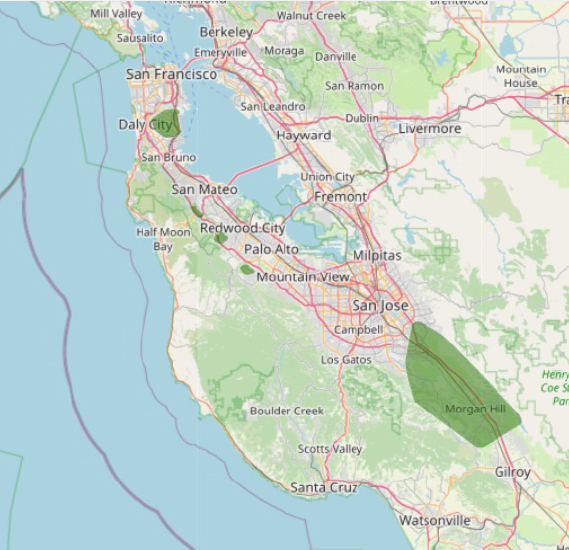
Coyote Ridge is largest population, southeast of San Jose (Source: USFWS)
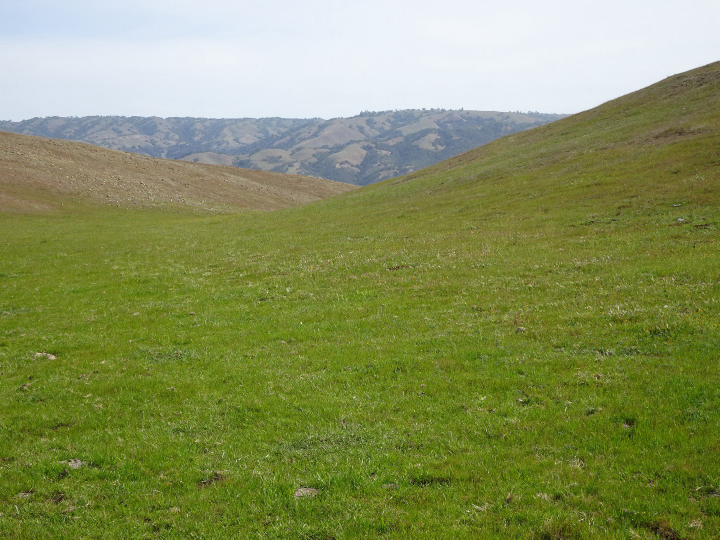
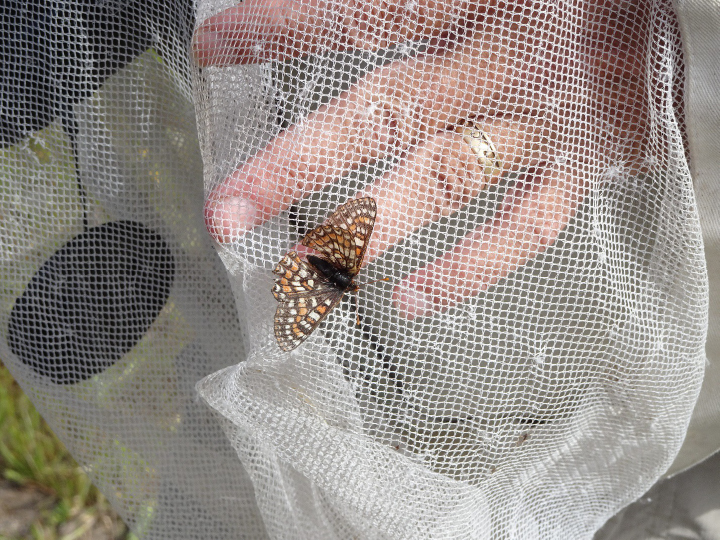
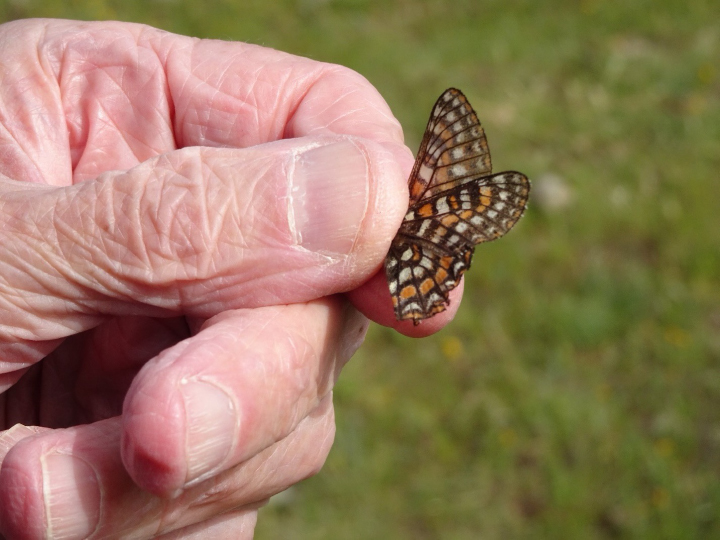
In the field, Stu managed to catch a couple of the elusive Euphydryas on the last, greenest patches of drying serpentine grassland in the area. I’ll never forget how gently—and fondly—Paul held his favorite butterfly between his thumb and forefinger and brought it close to his face so he could see it better given his weakening eyesight.
In the introduction to his 2003 book Butterflies: Ecology and Evolution Taking Flight, Ehrlich wrote:
Humanity is now faced with the greatest crisis in its history, a crisis that in some senses is shared by butterflies, and which, as an important test system, they can help to ameliorate. Biologists doing research on butterflies are developing these insects into one of the most important model systems for basic biological research. They are in the enviable position of both working with lovely and intriguing creatures and helping to save the world. What more could any scientist ask?
_______
A few days after Paul Ehrlich died, the Washington Post published an opinion by its Editorial Board with the headline: “Paul Ehrlich Has Died. His Shock Waves Remain.” And their sub-headline: “The dire predictions in “Population Bomb” are thoroughly discredited but still causing damage.” This was not a respectful obituary, as was due a public intellectual of Ehrlich’s stature, however controversial, in contrast to that published in the New York Times, for example. It was, instead, an unprofessional, mean-spirited, small-minded, shameful screed.
The main argument of the Post’s anti-Ehrlich editorial was that global food production has increased since The Population Bomb was published in 1968, as if that proves Ehrlich—and Malthus—wrong. Food production has increased, it’s true—but at a terrible cost to Earth’s ecosystems. The editorial didn’t mention the unsustainable soil erosion that is rapidly sending the deep rich soils of Iowa into the Gulf of Mexico or those of Ukraine into the Black Sea. They didn’t mention that humans now dominate the global nitrogen cycle through chemically fixing atmospheric nitrogen using fossil fuels—much of that done in the Persian Gulf, where artificial fertilizer flows are now blocked by the Iran War. They didn’t seem to remember that in their own paper a recent article summarized a study in Science showing that the diversity of American birds has decreased because of our damaging agricultural practices. They praised Norman Borlaug and the “Green Revolution” in plant breeding he spearheaded, which, among other things developed varieties of soybeans that would grow in the climate of Brazil, and led to dramatic losses of natural forest and grassland there. The increase in human food production emphasized by the Post’s editorial board has come at the cost of climate change, and the loss biological diversity and the irreplaceable ecosystem services it creates. The global food system is clearly unsustainable ecologically.
The Post’s editors couldn’t seem to suppress their scorn for anyone who challenges their pro-growth, pro-natalist worldview. They pooh-pooh Ehrlich’s view that we need to drastically shrink the human footprint on the planet if we are to have a chance at a sustainable future—a view held by pretty much any ecologist or environmental scientist anywhere today. Their growthmania reflects a deep ecological ignorance. Shame on them.
_______
Ehrlich, as a model of a socially and politically engaged ecologist when I was a college freshman, laid the foundation for my whole career. Still thinking about my mom’s challenge in a new way, I guess, I have never forgotten what he said in that freshman course, duly recorded in my notebook, which I still have: “We know what we need to do, ecologically speaking, but what we don’t know how to do is to create the political will to do what we know we need to do.” On the drive back to Palo Alto from Coyote Ridge in 2022, I asked Paul if he remembered what he’d said.
He did. “Still true, Unfortunately, still true,” Paul said, with a tone that mixed sadness and frustration.
Then I asked another question: “What about the future—are you hopeful?”
“I’m not interested in hope,” he said immediately. “What I’m interested in is action!’
Then I asked “So, what should we be doing?” I think I was expecting a bullet-list of “we should do this, this, this…” Which he has been writing about with coauthors since The Population Bomb days. But his response surprised me and was even more profound.
“We should just enjoy this life we have,” he said.
Before I could process that, he qualified it, saying “and try to leave the same opportunities to enjoy life to future generations.”
That immediately recalled the Native American “seventh generation” principle, codified by the Iroquois, but widespread in the ethics of many other Indigenous worldviews as well, that our decisions today should be based on what is good and right not only for us but also for seven generations into the future. It has often been taken as a non-Western touchstone for environmental ethics. But even seven generations may be too short. My northern European ancestors came to North America three or four generations ago to escape unsustainable political, economic, and ecological systems that were collapsing around them in Europe. By then it had been more than two thousand years since there had been a balanced and sustainable relationship between the human population of western Eurasia and the ecosystems of that region—far more than seven generations—and the pressure to explore, colonize, and exploit the rest of the planet had long been building there. After unravelling the human-nature relationship for so long, we have such a long way to go to reverse the ecological damage we have done and shrink human impact to a sustainable level that it often seems daunting.
Up until only a few years ago, Paul Ehrlich was still trying to prod us into taking action. In an essay, “Circling the Drain: The Extinction Crisis and the Future of Humanity,” published in June, 2022, in Philosophical Transactions of the Royal Society, Ehrlich and his coauthors Rodolfo Dirzo and Gerardo Ceballos wrote:
while concerned scientists know there are many individual and collective steps that must be taken to slow population extinction rates [of non-human species], some are not willing to advocate the one fundamental, necessary, ‘simple’ cure, that is, reducing the scale of the human enterprise. We argue that compassionate shrinkage of the human population by further encouraging lower birth rates while reducing both inequity and aggregate wasteful consumption—that is, an end to growthmania—will be required.
It seems pretty clear to me now that our political system in the United States is not capable of solving our ecological problems in our own country, and we can’t solve problems like anthropogenic climate change without action by every other country also. No political system in the world right now—democratic, authoritarian, or otherwise—seems to be able to do what is needed. Ehrlich was right fifty years ago, and we have made essentially no progress in my lifetime.
_______
Think of the biosphere as a butterfly. Of our home planet Earth fluttering among the chaos of the universe. We grip her with big, fat, strong human fingers, which can squish out her life in an instant if we aren’t careful. We need to learn, somehow, to hold her gently, with not too much force, and delight in her delicate beauty, before it’s too late.
For related stories see:
Sources and related links:
- Bay Checkerspot Butterfly, U.S. Fish and Wildlife Service
- Rawlings, John. 2008. “Jasper Ridge Biological Preserve’s Serpentine Grassland.” https://web.stanford.edu/dept/JRBP/plants/PDF/SerpentinePrairie.pdf
- History of Jasper Ridge Biological Preserve: https://jrbp.stanford.edu/about/chronology
- Paul Ehrlich on the Tonight Show with Johnny Carson, January 31, 1980. https://www.youtube.com/watch?v=6E5lUNBk3zQ
- Bruce A. Byers. 2024. Nature on the Edge: Lessons for the Biosphere from the California Coast. Oregon State University Press. https://osupress.oregonstate.edu/book/nature-on-edge
- “Paul Ehrlich Has Died. His Shock Waves Remain.” Washington Post, Editorial Board Opinion, 16 March 2026. https://www.washingtonpost.com/opinions/2026/03/16/paul-ehrlich-population-bomb-discredited-degrowth/
- “Paul R. Ehrlich, Who Alarmed the World With ‘The Population Bomb,’ Dies at 93,” Keith Schneider, New York Times, March 15, 2026. https://www.nytimes.com/2026/03/15/books/paul-r-ehrlich-dead.html
- “In Memoriam: Paul R. Ehrlich (1932–2026),” Stanford Program in Human Biology, March 25, 2026. https://humanbiology.stanford.edu/news/memoriam-paul-r-ehrlich-1932-2026
- https://www.un.org/en/conferences/environment/stockholm1972
- Sarah Kaplan, “North American birds are dying off faster. It signals a human crisis, too.” Washington Post, 26 February 2026. https://www.washingtonpost.com/climate-environment/2026/02/26/bird-populations-dying-farming/
- “Earth’s Population Has Surpassed the Planet’s Capacity, Study Suggests.” Environment, 7 April 2026, by Jess Cockerill. https://www.sciencealert.com/earths-population-has-surpassed-the-planets-capacity-study-suggests?utm_source=news.sciencealert.com&utm_medium=newsletter&utm_campaign=today-s-top-science-news
- “Global human population has surpassed Earth’s sustainable carrying capacity,”
- Corey J. A. Bradshaw et al. 2026 Environ. Res. Lett. 21 064023. 27 March 2026 https://iopscience.iop.org/article/10.1088/1748-9326/ae51aa
- Dirzo Rodolfo, Gerardo Ceballos, and Paul R. Ehrlich. 2022. “Circling the Drain: The Extinction Crisis and the Future of Humanity.” Phil. Trans. R. Soc. B, 377: 20210378. https://royalsocietypublishing.org/rstb/article/377/1857/20210378/108937/Circling-the-drain-the-extinction-crisis-and-the
- United Nations Conference on the Human Environment, 5-16 June 1972, Stockholm. https://www.un.org/en/conferences/environment/stockholm1972
- Paul R. Ehrlich; John P. Holdren, “Impact of Population Growth,” Science, New Series, Vol. 171, No. 3977 (Mar. 26, 1971), 1212-1217. https://www.science.org/doi/10.1126/science.171.3977.1212
- Paul R. Ehrlich, Peter M. Kareiva, and Gretchen C. Daily. “Securing natural capital and expanding equity to rescale civilization,” Nature Vol. 486: 6 8-73, 6 June 2012. https://www.nature.com/articles/nature11157


