

When I returned in late October to Falls Church, Virginia, a Washington, D.C., suburb where I’ve lived for more than thirty years, after a five-day, 3,000-mile drive from California, I had an old Joni Mitchell song stuck in my head: … / but I wouldn’t want to stay here/ it’s too old and cold and settled in its ways here/ Oh but California… The California road trip was a long-planned “book tour” to talk about and promote my 2024 book, Nature on the Edge: Lessons for the Biosphere from the California Coast. The trip was originally planned for April, but had to be postponed, and was resurrected and reconstituted over the summer. I’m grateful to the bookstores and other organizations that sponsored the presentations described below.
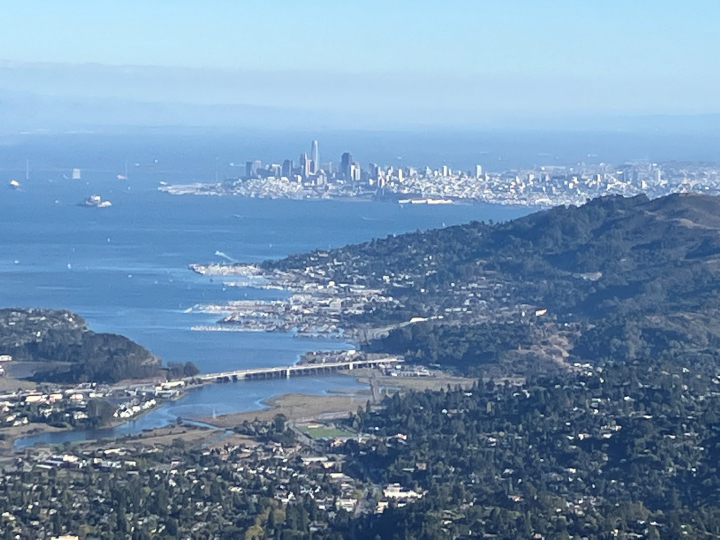
I didn’t expect that the tour would boost sales of my book by much, and that wasn’t the main point of it anyway. What I really wanted was to promote the ideas I explored in the essays in the book, about how a place like the San Francisco Bay Area, an international biosphere reserve that is part of the UNESCO Man and the Biosphere Programme’s world network of biosphere reserves, can serve as a living experiment, a laboratory for improving the frayed relationship between humans and the rest of the natural world. I wanted to discuss these ideas again with some of the people I’d met when doing the background research for the book in 2021 and 2022—people who informed and inspired me then and are friends now—and also test them out on new audiences. Another purpose of the trip besides talking about my book was to follow up on some of the initiatives I wrote about and learn about the current status of those efforts.
Mount Tamalpais Circumambulation
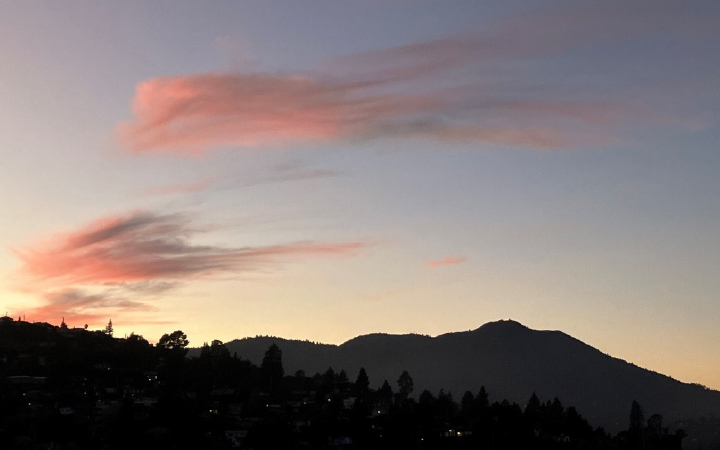
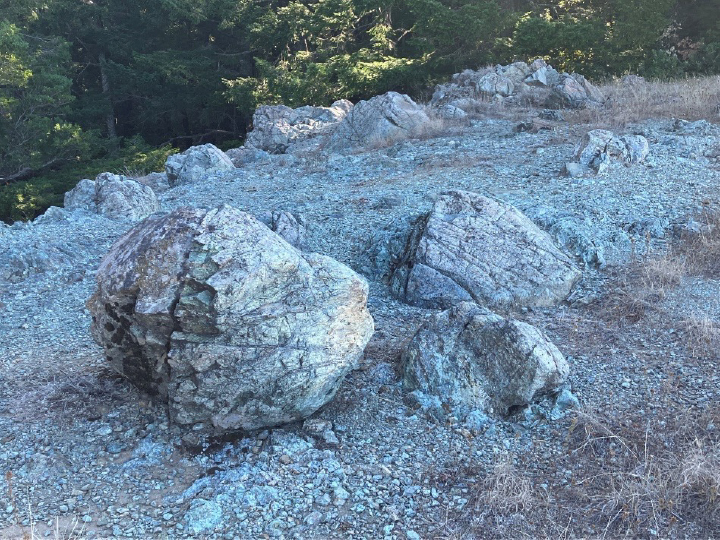
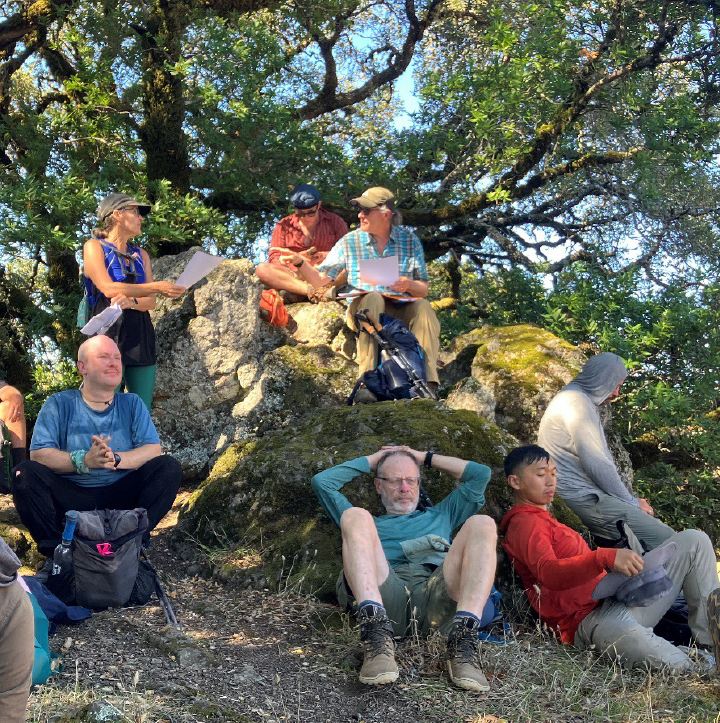
As I re-planned the trip, I chose a date as an anchor for the events: September 21st, the Fall Equinox. I did that because I wanted to join in the ritual walk, or “circumambulation,” up and around Mount Tamalpais, which is organized four times a year now on the solstices and equinoxes (see https://www.circumtambulation.org/ ). I had joined the walk on the Summer Solstice in 2021, done it two other times by myself, and wrote about it in the essay called “Circling the Mountain” in my book. The walk is a ritual pilgrimage started by Beat poets Gary Snyder, Allan Ginsberg, and Philip Whalen in October, 1965, modelled on similar practices in the Buddhist and Hindu traditions in Asia. I arrived in Mill Valley the afternoon of September 20th and watched the sun set over “Mount Tam.” The next morning I joined the group of around 40 circumambulators at Muir Woods to start the hike.
Reader’s Books, Sonoma
27 September, Saturday, 2:00 – 3:15 PM
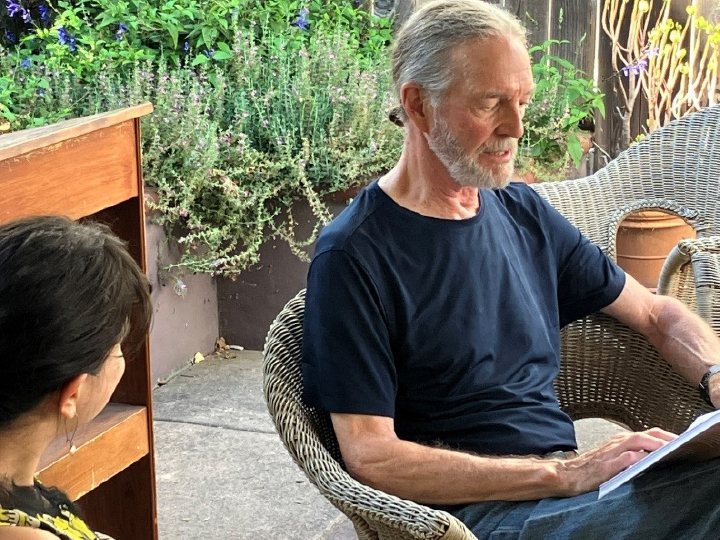
The reading and audience discussion at Reader’s Books in Sonoma happened on the Saturday afternoon of the annual Sonoma Vintage Festival, which may have reduced the turnout for the event, or not. The group was small, and rather than a stand-up talk and reading, we sat around in a circle. I read some selected passages from the book, and good questions and discussion ensued. The setting was lovely: a small garden area at the back of the store, with Anna’s hummingbirds buzzing as they sipped nectar almost at arm’s length.
Link to the original announcement: “Ecologist Bruce Byers presents his book, Nature on the Edge: Lessons for the Biosphere from the California Coast,” Reader’s Books, 130 East Napa Street, Sonoma, CA 95476
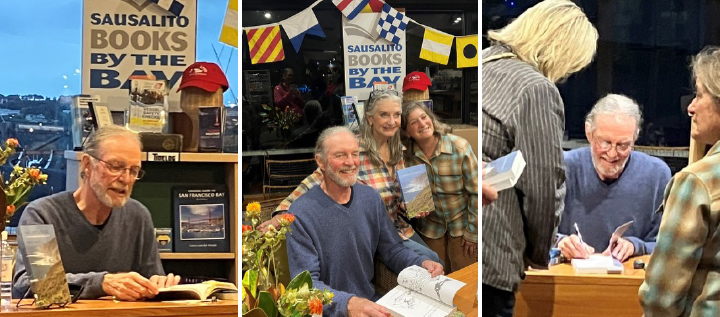
Sausalito Books by the Bay
30 September, Tuesday, 6:00 – 7:00 PM
Books by the Bay is a cool little indie bookstore right on the Sausalito waterfront, catering to a Marin County clientele and also selling wine! Cheryl Popp, who arranged the event, was enthusiastic about my book; she had read it thoroughly and flagged lots of passages with sticky notes to ask me about. Cheryl said she was usually almost exclusively a fiction reader, but loved my “storytelling.” That was encouraging to hear, because that is what I try to do in my writing, and I think of as one of its strengths. There was a fairly good turnout for a weekday evening, maybe 15 people. The event was billed as an author talk “in conversation with Mia Monroe”—Mia, recently retired from the National Park Service, was a tremendous help in my research for the book, connecting me with interesting people throughout the area through her seemingly endless network of contacts. There were good questions and discussion from the audience at the event, and books signed at the end.
Link to the original announcement: “Nature on the Edge by Bruce Byers, in conversation with Mia Monroe,” Sausalito Books by the Bay, 100 Bay Street, Sausalito, CA 94965
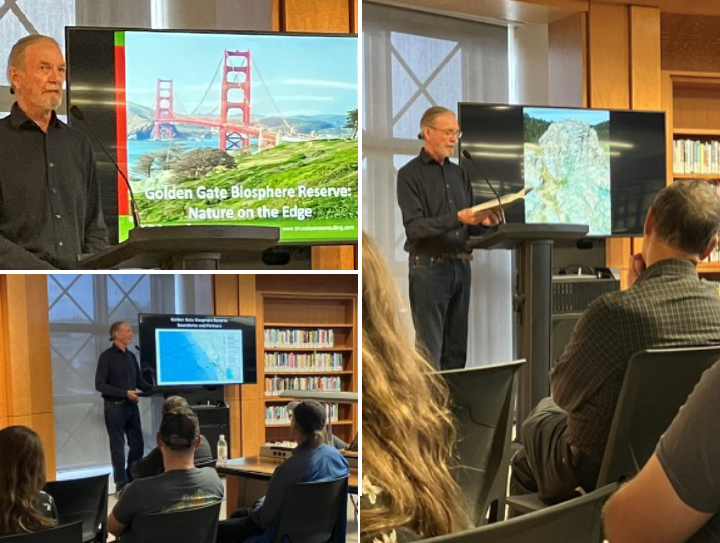
San Francisco Public Library Environmental Center
1 October, Wednesday, 5:30 – 7:00 PM
This talk was at the Environmental Center at the main San Francisco Public Library, smack downtown on Civic Center Plaza, underground parking and all. The event was fairly well publicized and fifteen or so people attended. The library had several copies of my book to check out, but there were no book sales at this event. This was a different format than the bookstore talks, and fun for me, because I could use a visual presentation rather than only talking and reading. Some good questions and discussion at the end.
Link to the original announcement: “Author: Dr. Bruce Byers On The Golden Gate Biosphere Reserve,” San Francisco Public Library Environmental Center.
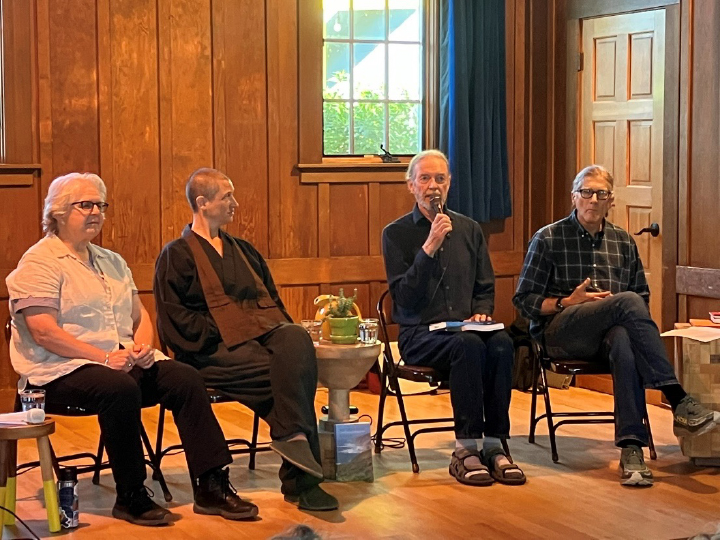
Point Reyes Station Panel
October, Saturday, 10:30 AM-12 noon.
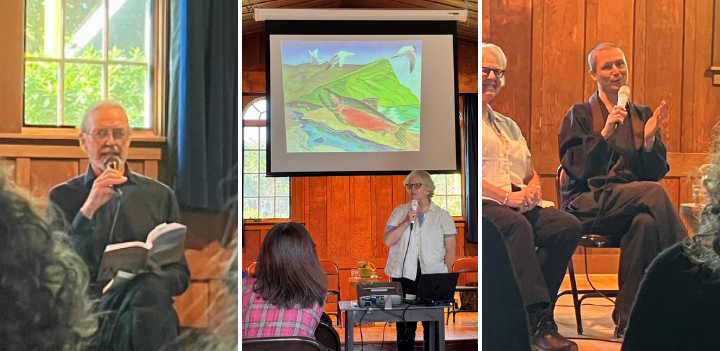
This event was the final, and most complicated, of the four public events of the “tour.” It was co-sponsored by the Mesa Refuge, a center for writers where I was invited for a writing residency in June, 2021, at which the writing of Nature on the Edge was basically “launched.” Point Reyes Books, the Environmental Action Committee of West Marin, and the Point Reyes National Seashore Association also co-sponsored the event.
I planned this event as a discussion with three of the people I’d met as I researched and wrote the book—people who informed and inspired my thinking and writing. One was Gifford Hartman, who has been organizing and leading the ritual, quarterly circumambulation of Mount Tamalpais, which I described in the essay “Circling the Mountain.” Another was Sara Tashker, from Green Gulch Farm and Zen Center, the source for my essay “The Salmon Sermon.” And Robin Chandler, a Bay Area artist who worked with me to develop the frontispiece illustration for the book.
Link to original announcement: “Nature on the Edge: A Conversation with Bruce Byers, Sara Tashker, Gifford Hartman, and Robin Chandler,” at the Dance Palace, Point Reyes Station.
Stanford Human Biology Mentoring Lunch
3 October, Friday, 12:30 – 2:00 PM
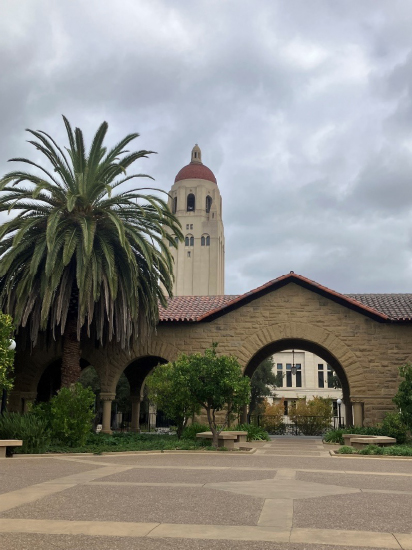
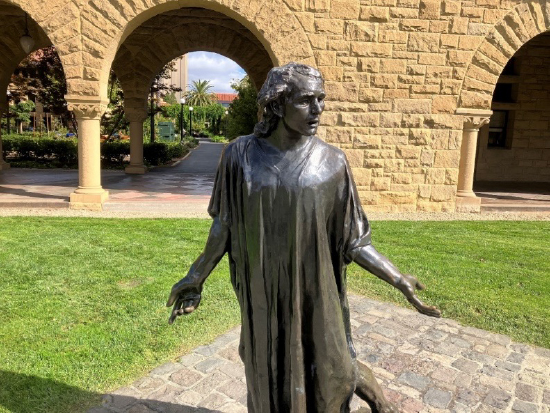
I had an interesting discussion over lunch with five Stanford undergraduates who were majoring either in Human Biology (my major at Stanford) or Earth Systems (a new interdisciplinary natural sciences major that seems to have partially supplanted HumBio). I described how the Human Biology Program fed my interdisciplinary interests in ecology and culture at a formative time, and laid the foundation for my entire career. The students were a bit timid about asking questions at first, but by the end I got a glimpse of how each of them was beginning to imagine how Stanford might launch them on a lifetime path they wanted to explore. Great! It was low-key affair, but fun to meet a few students, and to wander around the Stanford campus before and after.
Blue Butterfly Resurrection
24 September, Wednesday AM
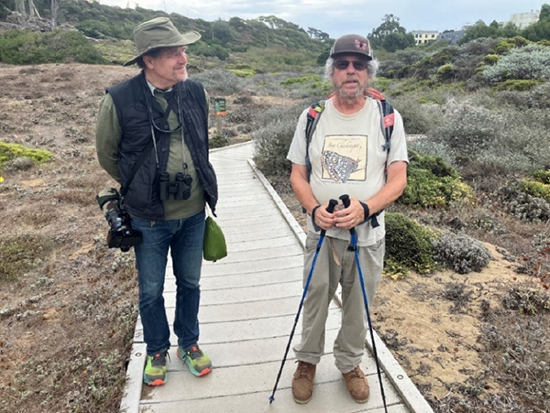
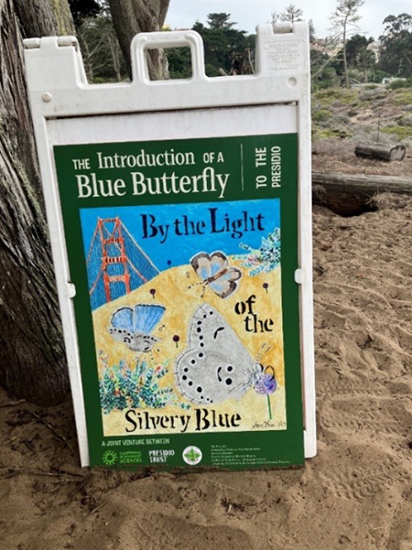
In the essay “Butterfly Blues,” I described an attempt to restore a close genetic relative and ecological equivalent of the extinct Xerces Blue butterfly to restored sand dune habitats at the Presidio, and I was eager for an update on that initiative. My update was accomplished with a morning visit to the Presidio Dunes, Lobos Creek, and Rob Hill with Durrell Kapan, a butterfly genomics expert from the California Academy of Sciences, who has been leading the effort. We were accompanied by Stu Weiss, another butterfly scientist and habitat restoration expert; Liam O’Brien, a butterfly illustrator and local lepidopterist; and Mia Monroe, previously mentioned, who had arranged the trip through her magical networking. Turns out that the introduction of a close cousin of Xerces, a subspecies of the Silvery Blue from dunes along Monterey Bay, seems to be working! This spring, unmarked individuals that must be the offspring of the first group of Silvery Blues introduced last year were found on the restored dunes at the Presidio.
William Keith’s Yosemite
25 September, Thursday
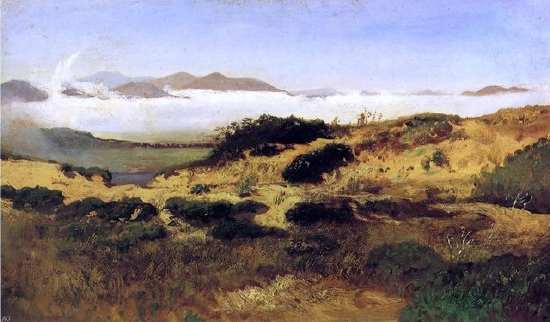
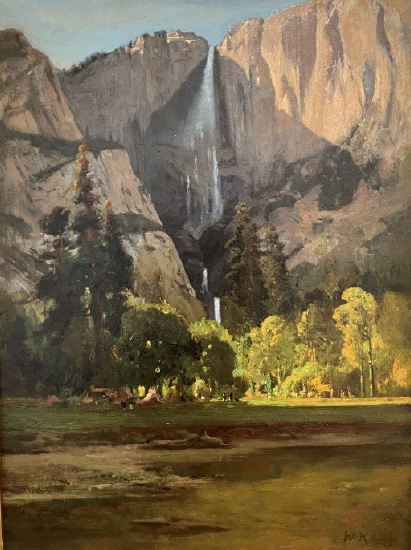
William Keith was a contemporary of John Muir, a friend and fellow Scotsman. I referenced his painting of Sand Dunes and Fog in an essay in the book titled “Butterfly Blues.” It depicted the dunes habitat that sprawled over what is now the Sunset and Richmond districts of San Francisco in the 1880s when the painting was made. Keith was a western member of the Hudson River School of landscape painters, who shared their dislike of how settlement and industrialization was despoiling the sublime beauty of the North American landscape. I knew that St. Mary’s College in Moraga, east of Berkeley and Oakland, holds the world’s largest collection of Keith paintings. Their art museum happened to have an exhibition of Keith’s paintings of Yosemite, and I arranged to see it with Robin Chandler (artist who did the frontispiece illustration for my book). It was excellent, and made me aware of the lighter, brighter paintings in Keith’s oeuvre. And I learned a lot about how Keith, working with John Muir, attempted to use his paintings to keep the Hetch Hetchy Valley from being dammed for a water supply reservoir for San Francisco—a fascinating example of art as a tool for ecological advocacy, perhaps the subject of a future essay but too much of a rabbit-hole to go down here.
Stanford University Jasper Ridge/ ’Oochamin ‘Ooyakma Biological Preserve
2 October, Thursday, 10:30 AM
Stanford’s Jasper Ridge Biological Preserve was a key institutional player in the establishment of the Golden Gate Biosphere Preserve in 1988. I visited Jasper Ridge in 2022 as part of my research for the book, and wanted to follow up, so I arranged a visit through Adriana Hernández, the associate director for research. It was a beautiful morning, and the walking and talking was great fun.
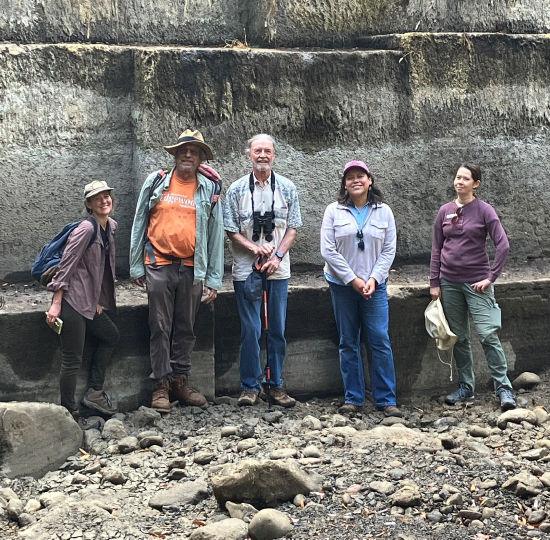
One thing I learned about on this visit was especially resonant for me because of my essays about the value and importance of Indigenous ecological knowledge and ecologically centered worldviews in Nature on the Edge, essays titled “Coyote’s Basket” and “The View from Limuw.” Jasper Ridge Biological Preserve has started a collaboration with the Muwekma Ohlone Tribe, the Indigenous group that traces its ancestry to the area. The preserve has adopted the Ohlone name for Jasper Ridge, ‘Ootchamin ‘Ooyakma; established an annual youth campout; and begun to explore the relationship between Western “scientific” ways of trying to understand the complexities of the human-nature relationship and non-Western, Native American ways of doing so. Both are probably equally “scientific” in being based on careful, long-term observation of nature and people’s effects on it, but Indigenous science is structured by an ecocentric, rather than anthropocentric, worldview. Fascinating work!
Miscellaneous Other Adventures:
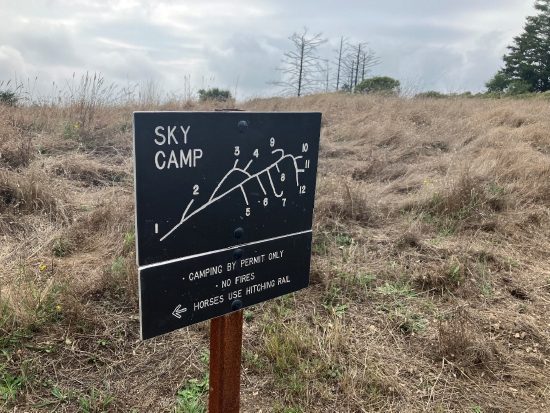
Sky Camp Hike
28 September, Sunday
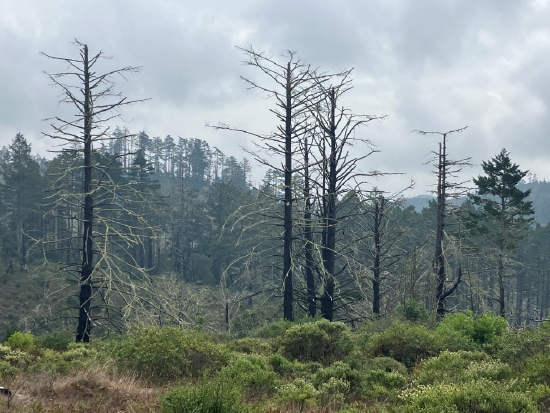
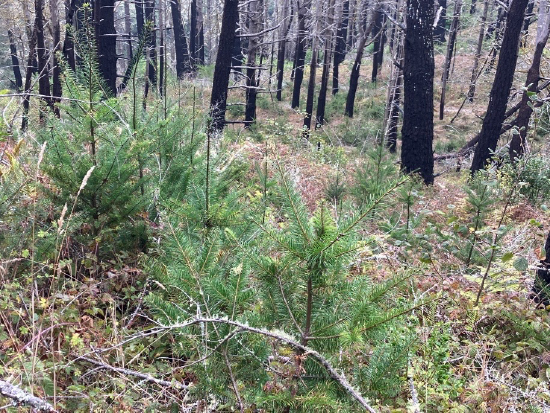
Hike to Sky Camp in Point Reyes National Seashore, setting of the essay “Séance at Sky Camp,” on the Sky Trail, then on up Mount Wittenberg, through an area recovering from the Woodward Fire of 2020 that I wrote about in “Making Friends with Fire.”

In introducing Robin Chandler (the artist who did the frontispiece illustration for my book) at the Dance Palace panel, I explained that I first became aware of her work through her painting Salmon Returning to Redwood Creek (which was displayed on the screen at the Dance Palace event in an earlier photo). At that event, Robin explained that “reading Bruce’s Nature on the Edge inspired me to hike the Point Reyes National Seashore during Winter of 2024 – 2025 and see this special place through his eyes. In turn, I was inspired to make art – both paintings and poems – which I will soon self-publish as a book called Winter Reyes.”
Elk on the Loose
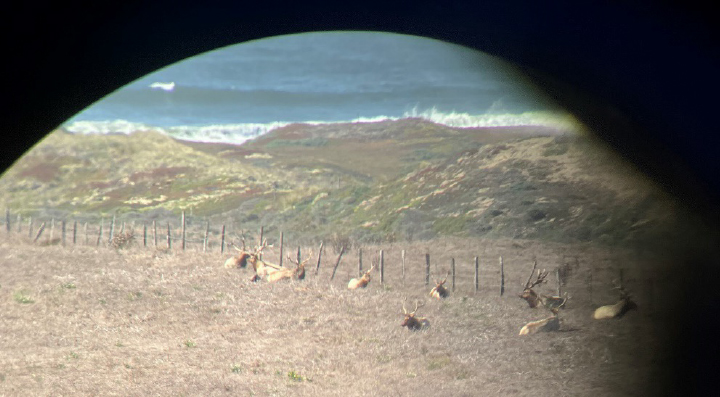
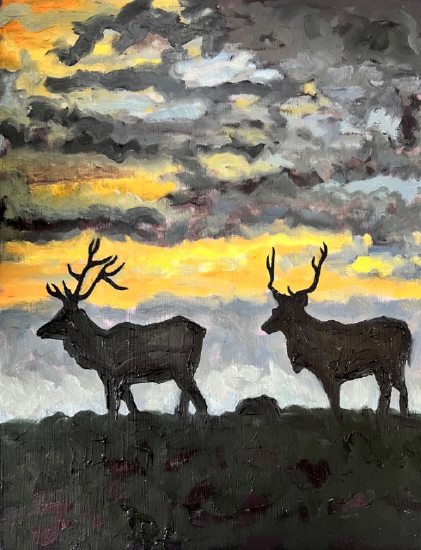
And then come the elk! I wrote about their creative pressure to escape from the fenced-in area of the Tomales Point Elk Reserve in the essay “Séance at Sky Camp,” and about how the National Park Service was evaluating its options for how to deal with the elk. Since the book was written, they decided, through a public process under the National Environmental Policy Act, to take down the fence, and let the elk roam where they will. A win for the elk! And for we humans too, in my opinion. On a trip out to the outermost reaches of the Point Reyes Peninsula—the lighthouse, and Chimney Rock area, we were thrilled to see the elk, on the loose at last. A big gang of bulls, a “bachelor herd,” lounging on dairy farm “property.”
Green Gulch Farm and Zen Center
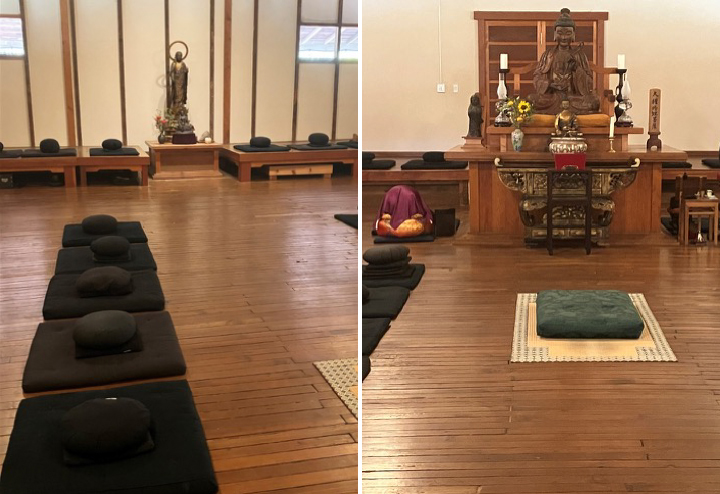
On September 23 I visited Green Gulch again, the site of the essay “The Salmon Sermon”.
Gathering of Ohlone Peoples
5 October, Sunday, 10 AM -3 PM “Gathering of Ohlone Peoples,” Coyote Hills Regional Park, Fremont, CA https://www.ebparks.org/Gathering-of-Ohlone-Peoples
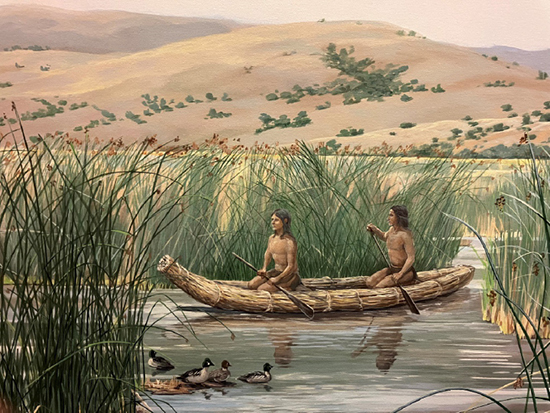
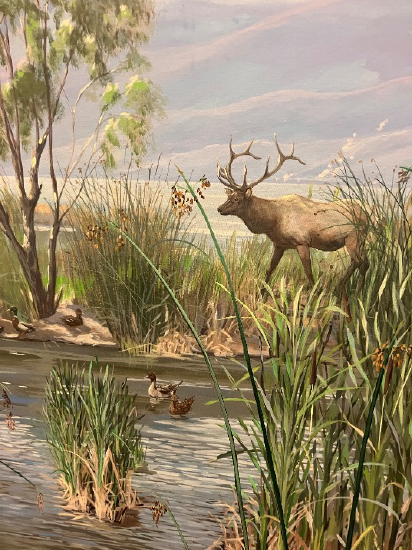
A fascinating collaboration between the East Bay Regional Parks District and organizations representing the Indigenous Ohlone peoples of the region—none of whom yet have federally recognized tribal status or sovereignty. In the essay titled “Coyote’s Basket,” I wrote about the complexity and contention surrounding trying to restore tribal identity in an area where Spanish missionization deliberately sought to erase it, and current efforts and initiatives to revitalize Native languages and worldviews. The “Gathering of Ohlone Peoples” gave a glimpse of those efforts and their status.
As I describe in the essay “The View from Limuw” in Nature on the Edge, many of the UNESCO biosphere reserves I have worked in around the world, such as the Sierra Nevada de Santa Marta Biosphere Reserve in Colombia, are places where strong indigenous cultural visions and worldviews are being conserved and revitalized. The same could be true in the Golden Gate Biosphere Reserve, and I hope to see strong collaboration develop going forward between Indigenous Bay Area tribes and tribal associations and the other partners in the biosphere network. This would include, for example, the Muwekma Ohlone who are collaborating with Stanford’s Jasper Ridge Preserve; the Association of Ramaytush Ohlone, which participated in the Gathering of Ohlone Peoples at Coyote Hills; and the Amah Mutsun Tribal Band, which has collaborated with the Midpeninsula Open Space Council at Mount Umunhum, and whose land trust has started to acquire its own land.


January 6, 2026 5:28 pm
This is great reading.
Glad to see you being still strong.
I still harbor the ambition to write about my work and life experience.
January 8, 2026 3:56 pm
Thank you, Professor Mwangi! I encourage you to write about all of your experience working to conserve wildlife in Eastern Africa!